A Sir Whiskerton Story
A reader's memory. A grandmother's wish. A tree that remembers.
Dedicated to Klara.
Part One: The Letter
The farm received a letter once.
It arrived on a Tuesday — not through the post, because the farm did not have a post, but carried by a bird who had flown a very long way and was, by the time she landed on the fence post, quite out of sorts about it.
She was a small bird. A sparrow, perhaps, or something close to it. Her feathers were dusty from travel, and her eyes held the particular weariness of a creature who had crossed an ocean and was not entirely sure it had been worth it.
She landed on the fence post and waited.
Doris the Hen noticed her first, because Doris noticed everything first, and because Doris was of the firm opinion that anything arriving on the farm should be inspected by a hen before it was allowed to proceed.
"State your business," Doris said.
The sparrow looked at her.
"I have a letter," she said, "for the one called Whiskerton."
Doris blinked. "A letter? For a cat?"
"For the one called Whiskerton," the sparrow repeated. "I was told he would understand."
Doris did not understand. But Doris was, above all else, a hen who could not resist a piece of paper. She escorted the sparrow to the barn, where Sir Whiskerton was sitting on a bale of hay, contemplating a sunbeam with the quiet intensity of a detective who had solved every mystery except the one that mattered.
"A letter for you," Doris announced. "From a bird. From very far away, apparently."
Sir Whiskerton looked up.
The sparrow hopped forward and dropped the letter at his feet. It was a small envelope, crumpled from travel, sealed with wax that had softened in the sun and then hardened again.
"I was told to deliver it to the farm at the edge of the pasture," the sparrow said. "I was told you would know what to do with it."
Sir Whiskerton looked at the envelope.
He did not open it.
Instead, he picked it up — gently, carefully, the way he picked up everything that mattered — and he carried it to Old Mable.
Part Two: The Reading
He read it against her trunk.
He did not know why. He did not need to. Some things, he had learned, were not meant to be understood — only honored.
The letter was written in a careful, looping hand — the hand of someone who had learned to write long ago and had never quite stopped being proud of it. The ink was faded. The paper was thin.
It said:
To whoever is reading this —
My grandmother told me a story once. She was from a country called Albania, in a town called Fier. When she was young, a man wanted to marry her. He asked her what gift she would like — jewelry, money, land, anything. She thought about it for a long time. And then she said:
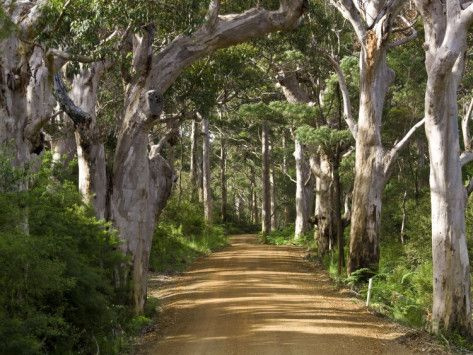
"I wish the road from Fier to Vlora were lined with eucalyptus trees."
He did it. He arranged for the trees to be planted. More than a century later, some of them are still standing.
My grandmother is gone now. The man who planted the trees is gone. But the trees are still there. They shade travelers. They scent the air. They are a gift that no one asked for and everyone received.
I live in a new country now. I am old. I have seen many things change — love, and the way we speak of it, and the way we offer it. Sometimes I wonder if we have forgotten how to give gifts that outlive us. Sometimes I wonder if we have forgotten that love can be a road, and not just a ring.
I am writing this to a farm I have never seen, in a world I do not know, because I was told that the one called Whiskerton would understand.
I do not know if that is true. But I hope it is.
Plant something. For someone you will never meet.
That is all.
— A friend
Sir Whiskerton read the letter three times.
He did not cry. Cats do not cry. But something in his chest — something old and quiet and seldom touched — shifted.
He looked up at Old Mable.
She did not speak. She never spoke. But her leaves rustled, and the rustle sounded, for just a moment, like the wind through eucalyptus trees on a road in a country he had never seen.
Part Three: The Telling
He told Bessie first.
He did not know why. He did not need to. Bessie was the farm's unofficial therapist, and Sir Whiskerton had learned long ago that some things were best said aloud to someone who would not judge.
He found her in the pasture, chewing on a patch of clover with the serene expression of a cow who had made peace with the universe.
"Bessie," he said. "I need to tell you something."
She looked up. "Groovy," she said. "Tell me."
He told her about the letter. About the grandmother. About the road from Fier to Vlora. About the eucalyptus trees that were still standing, more than a century later, shading travelers who would never know who planted them.
Bessie was quiet for a long moment.
"That," she said finally, "is the most beautiful thing I have ever heard."
"It is a road," Sir Whiskerton said. "Just a road with trees."
"No," Bessie said. "It is a wish. A wish that someone made, and someone else granted, and a hundred years of strangers received. That is not just a road. That is a prayer that grew."
Sir Whiskerton thought about this.
"I do not know what to do with it," he admitted. "The letter. It was sent to me. But I do not know what it is asking."
Bessie smiled — a slow, warm, hippie smile that seemed to make the clover around her grow a little greener.
"It is not asking anything," she said. "It is offering something. It is offering a way of seeing. A way of loving. A way of leaving gifts for people you will never meet."
She looked toward Old Mable, at the edge of the pasture, where the moss was soft and the spring was cold and the initials J.M. + E.R. were still carved into the bark.
"You already have one," she said. "You just did not know what she was."
Part Four: The Grove
The farm planted a grove.
It was not a grand gesture. It was not a ceremony. It was simply something that needed to be done, and so they did it.
Sir Whiskerton chose the spot — a small rise just beyond Old Mable, where the soil was rich and the light was good and the wind carried the scent of the spring.
Bessie chose the trees — eucalyptus, because the letter had said eucalyptus, and because none of them had ever seen one and they wanted to know what a tree that scented the air might smell like.
Porkchop the Pig dug the holes, because Porkchop was good at digging and because he had recently discovered a passion for landscaping.
The hens donated feathers for mulch, which was not strictly necessary but was deeply appreciated.
The geese supervised, which was not strictly necessary and was not deeply appreciated.
Doris read the letter aloud to the entire farm, because Doris read everything aloud, and because this letter — this one letter — deserved to be heard.
And when the trees were planted, and the mulch was spread, and the sun was beginning to set over the pasture, Sir Whiskerton sat down against Old Mable's trunk and closed his eyes.
He thought about the grandmother. He thought about the man who had planted the trees. He thought about the road from Fier to Vlora, and the travelers who had walked beneath it, and the ones who would walk beneath it still.
He thought about the letter, and the bird who had carried it, and the farm that had received it.
And he thought: This is what love is. Not a ring. A road. Not a promise. A grove.
He opened his eyes.
The eucalyptus trees were small. They would not shade anyone for years. They would not scent the air for decades. They might not even survive the winter.
But they were there.
And that, Sir Whiskerton decided, was enough.
Part Five: The Full Moon
That night, the moon was full.
Jazzpurr climbed onto the woodpile, as he always did, and he picked up his drum, as he always did, and he played a quiet rhythm for a ghost who might or might not be watching.
But this time, the rhythm was different.
It was not a rhythm of acknowledgment. It was not a rhythm of goodbye. It was a rhythm of offering — a slow, rolling beat that seemed to say: We planted something. For you. For everyone. For the ones who come after.
And somewhere, high above the farm, a shadow crossed the moon.
Long Yi did not land. She did not need to. But she paused — just for a moment, just long enough to see the small grove of eucalyptus trees at the edge of the pasture, their leaves silver in the moonlight.
She did not know what they were.
She did not need to.
She simply tilted her head — slightly, almost imperceptibly — in the direction of the woodpile.
And then she flew on.
Jazzpurr played for another hour. He did not sleep. He did not want to. He had a poem to write.
Epilogue: The Coffee Can
The next morning, Doris the Hen found a new item in the coffee can on Old Mable's platform.
It was a single eucalyptus leaf — small, silver-green, still soft with dew. No one knew who had put it there. No one asked.
But Sir Whiskerton, who had climbed to the platform at dawn, who had seen the leaf, who had understood — he simply nodded.
I was here, the leaf seemed to say. So were you.
He left it where it was.
And he climbed back down, and he walked past the grove of small trees, and he sat against Old Mable's trunk, and he waited.
For what, he did not know.
But he waited.
And Old Mable — patient, rooted, eternal — held him.
The End